

If you’re planning a new website or thinking about migrating from one platform to another, Shopify vs Wix is one of the most important decisions you’ll make. Both are hosted, no-code platforms; both are popular; both can power an online store.
But under the surface, they’re built with very different priorities. Shopify is a commerce engine that can also run your website, while Wix is a flexible website builder that can also run a store. That difference shapes everything: from daily workflows to marketing options, scalability, and how expensive a “wrong” choice becomes over time.
This article walks through how Shopify and Wix really compare-so you can pick the platform that suits your business, not somebody else’s.
1. How Shopify and Wix Work Behind the Scenes
Both platforms are hosted solutions: you sign up online, choose or customize a theme, and manage everything from a browser, while hosting, basic security, and core updates are handled for you. On the surface, the model looks the same.
The foundations, however, are different.
Shopify: Store-first architecture
Shopify is built around the store admin. When you log in, you see products, variants, and inventory, plus orders, fulfillment workflows, customers, analytics, discounts, and sales channels at the center of the experience. Pages and blog posts absolutely exist, but they are there to support the store rather than define it. From the first login, the dashboard speaks the language of retail and operations.
Wix: Website-first architecture

Wix, by contrast, is built around a visual website editor. You begin with the site’s design and page structure, then layer in apps for store, bookings, blog, events, and other features. The central experience is “design and manage a site,” not “run a warehouse.” You can certainly build a fully functional store on Wix, but the mental model is “add eCommerce to a website,” whereas Shopify’s is “build a business around a store backend.”
If your business is store-centric, Shopify’s architecture tends to feel natural. If your business is brand- or content-centric with a store as one component, Wix’s structure often feels more comfortable.
Comprehensive Wix Review: Full Overview of Its Features and Advantages
2. Ease of Use: Which Feels Simpler Day to Day?
“Easy” depends heavily on what you’re trying to do.
Shopify: Optimized for running a store
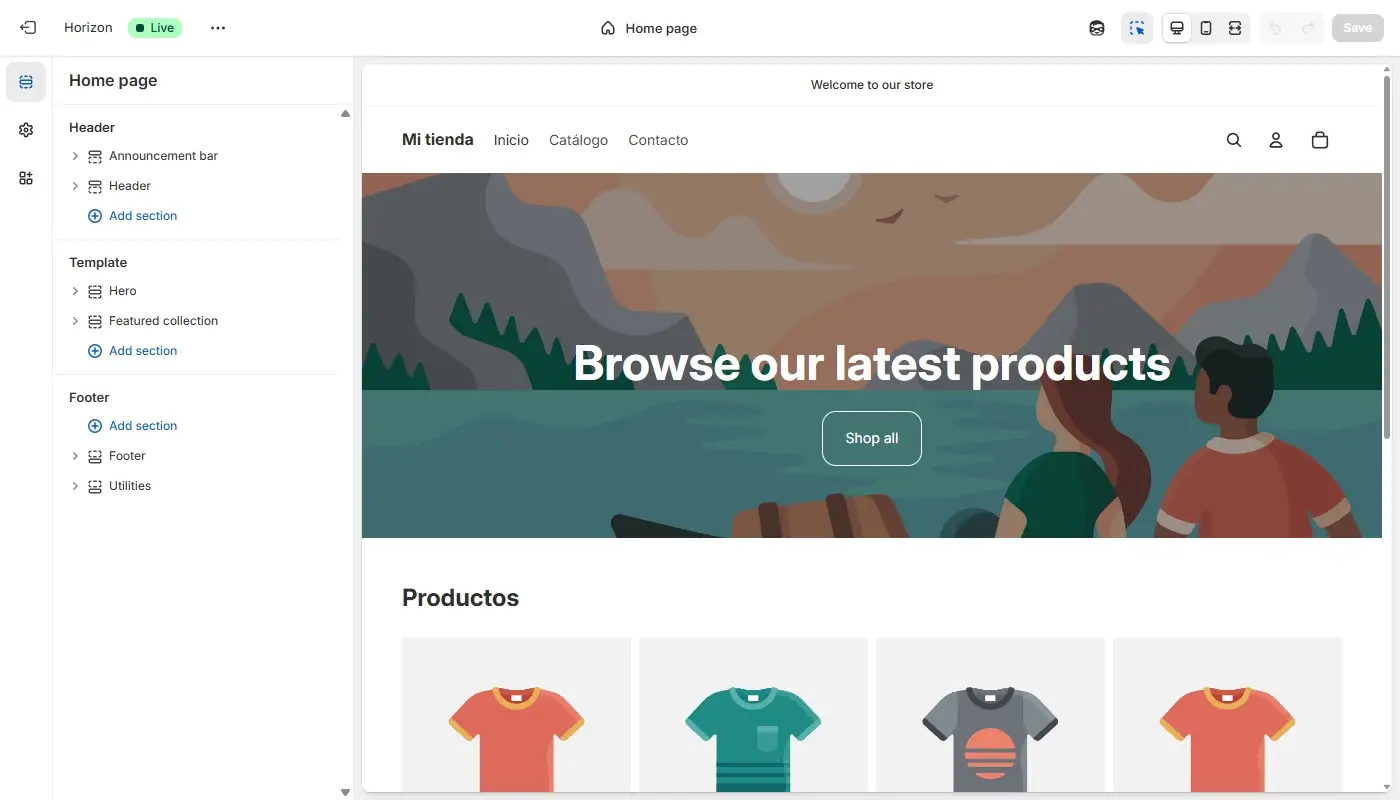
Shopify’s learning curve is a bit steeper at the very beginning, but the interface is highly logical for merchants. Menus mirror real tasks such as managing products, processing orders, reviewing customer data, and checking analytics. The onboarding flow nudges you through setting up payments, shipping, and taxes in a sequence that matches how a real store goes live. If you’ve never thought about SKUs or shipping zones, there is a fair amount to absorb, but once you understand the basics, daily operations-fulfilling orders, issuing refunds, updating products-feel surprisingly smooth.
Wix: Optimized for building and editing pages
Wix feels more intuitive if the main thing you expect to do is edit the site itself. You work directly on the page, dragging elements into place, rearranging sections, and seeing your layout evolve visually. The navigation revolves around site structure, design, and apps. Store management is present and usable, but it isn’t the conceptual center of the interface. If you constantly tweak layouts, add sections, or experiment with visual storytelling, Wix often feels more “hands-on” and fun.
In short, Shopify’s admin wins when the core of your day-to-day work is store operations, while Wix feels friendlier when the core of your work is visual site editing.
3. Design, Templates and Branding
Both platforms can produce attractive sites-but they approach design from different angles.
Wix: More creative freedom for site design
Wix is known for a very large template library that spans countless niches and industries, from coaches and photographers to restaurants, agencies, and local services. On top of that, its visual editor gives you fine control over placement, spacing, backgrounds, and even animations, with many pre-built sections-hero blocks, testimonials, galleries, feature grids-that you can mix and match. This combination makes it easy to build layouts that feel custom and expressive without writing code. If your brand story, portfolio, or editorial content is central to how you present yourself, this level of flexibility is a big plus.
Shopify: Store-optimized themes
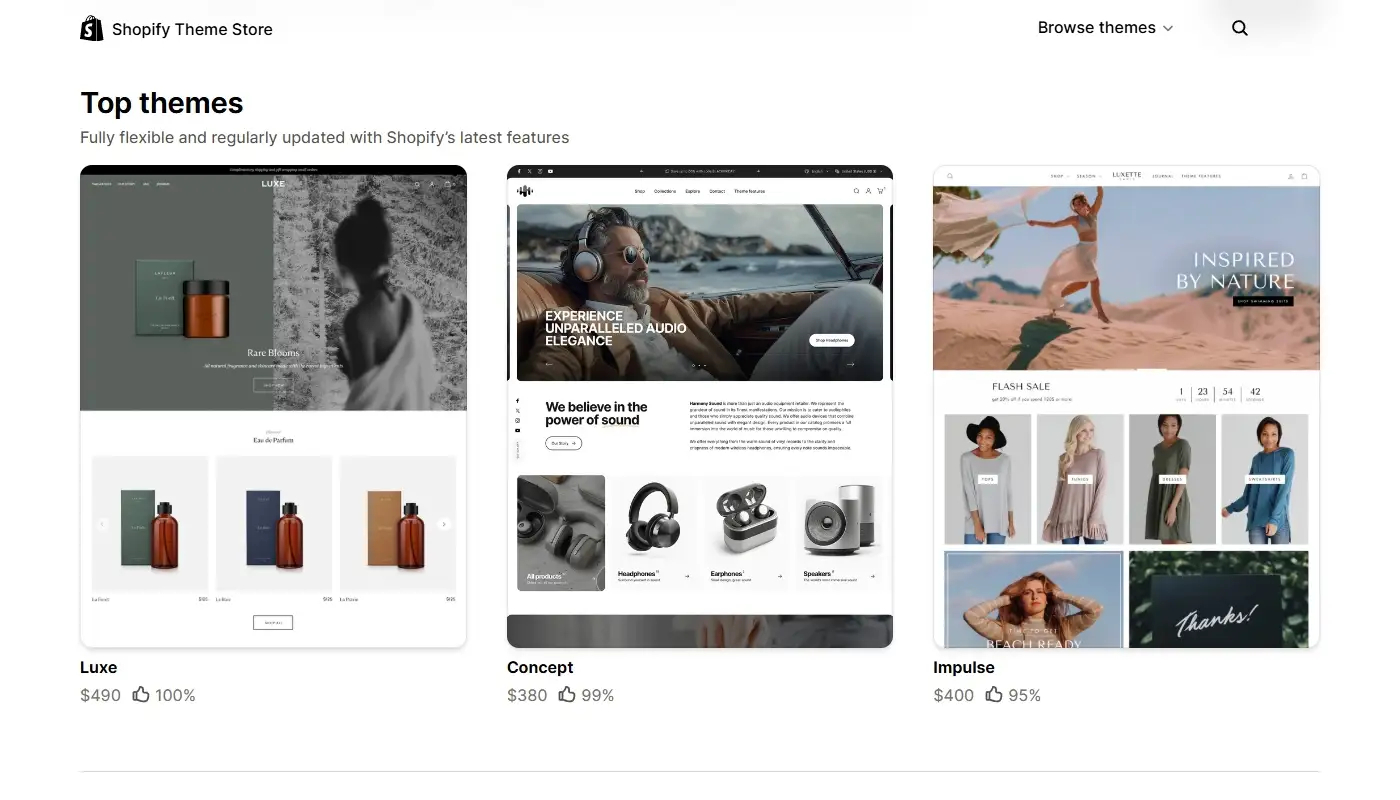
Shopify’s themes are designed primarily to showcase products and drive checkout. They focus on clear product grids, strong product pages with images and descriptions, review sections, and obvious calls to action. Homepages typically include structured zones for featured collections, hero banners, social proof, and content snippets. The overall design language is about clarity and trust more than experimental layouts. You can absolutely make a Shopify store feel on-brand with the right theme and configuration, but the system is opinionated: it leans toward layouts that help visitors browse, understand, and buy.
If your priority is creative freedom and visual storytelling across many types of pages, Wix usually feels more expressive. If your priority is clean merchandising and conversion-focused storefronts, Shopify provides a very strong starting point.
Comprehensive Shopify Review: Main Benefits, Drawbacks and Core Functionality
4. eCommerce Features: Where Shopify and Wix Really Diverge
You can run a store on both platforms, but the depth of eCommerce tooling is not the same.
Wix eCommerce: Good for small-mid stores
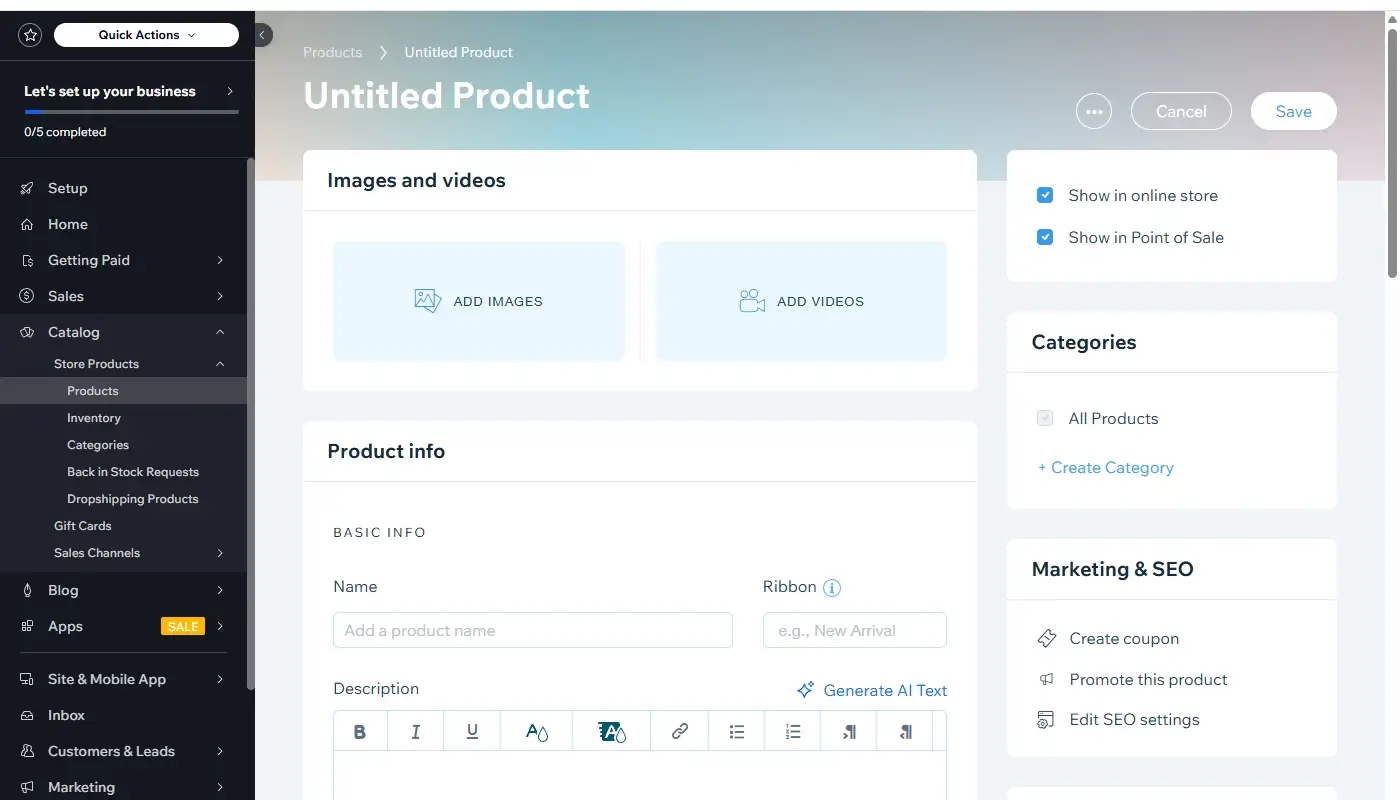
Wix lets you add products with variants, track inventory at a basic level, and offer a standard cart and checkout. You can configure discounts, simple coupons, basic tax rules, and shipping options. For small catalogs, straightforward pricing, and uncomplicated logistics, this is often more than enough. It works especially well when the store is one part of a broader site where services, content, and brand presentation also play a big role.
Shopify eCommerce: Built for serious retail
Shopify, in contrast, is designed for stores that need more sophisticated operations. It handles complex product and variant structures, stock across locations, detailed discount and promotion logic, and robust abandoned cart workflows. It offers multi-channel selling across the online store, point-of-sale systems, social platforms, and marketplaces, and provides much deeper analytics around sales, products, and customer behavior. As catalog size grows, order volume increases, and marketing becomes more complex, Shopify’s commerce-first DNA becomes more of an asset with every step.
A useful rule of thumb is that if your store is a side feature of a brand site, Wix can be entirely sufficient. If the store is the business, Shopify is usually the safer long-term bet.
5. Apps, Integrations, and Automation
No modern platform exists in a vacuum. You’ll want your website to talk to email providers, CRMs, shipping services, review tools, and more.
Wix App Market
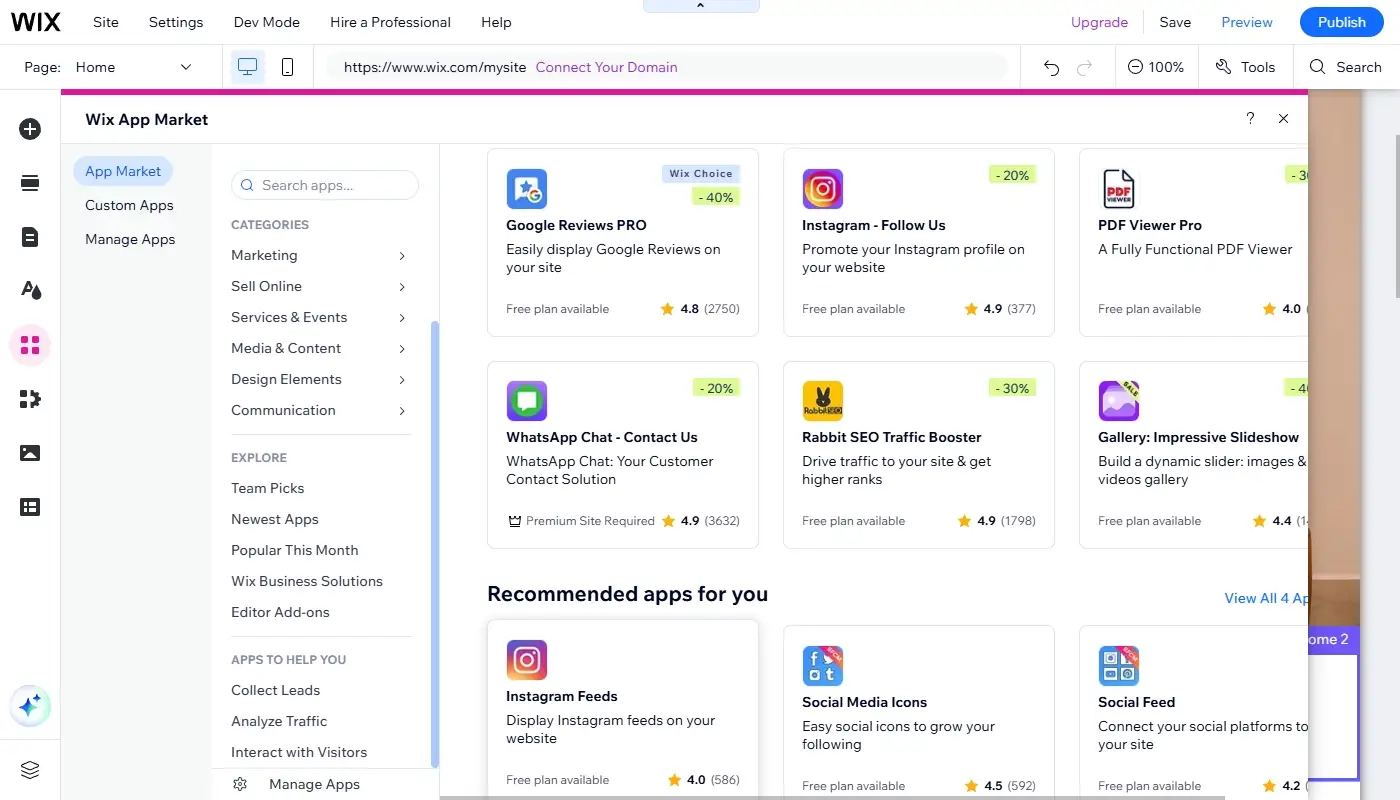
Wix offers a broad app marketplace aimed at general website needs. You’ll find tools for contact forms, live chat, social feeds, bookings, events, basic marketing automation, and integrations with several popular CRMs and email tools. For many small businesses and relatively simple stores, the available apps are enough to support everyday workflows.
Shopify App Store
Shopify’s app ecosystem is heavily commerce-focused. You’ll see multiple options for reviews and user-generated content, a range of loyalty and referral systems, subscription and recurring billing tools, apps for bundles and upsells, and many integrations for shipping, fulfillment, inventory optimization, and advanced analytics. If your growth depends on automating parts of your sales funnel, adding subscriptions, optimizing shipping, or personalizing offers, Shopify’s app store usually offers more depth and more specialized choices.
When your business is built around the store, having this eCommerce-centric ecosystem can be a decisive advantage.
6. SEO, Content, and Marketing
Both platforms can support SEO and content marketing, but their strengths show up in slightly different places.
Wix: Solid for mixed content + business sites
Wix is very comfortable when you run a content-plus-business or content-plus-store site. You can create rich pages for services, landing campaigns, and about sections, then add a blog that integrates neatly into your navigation. The editor makes it easy to structure content, set SEO basics like meta titles and descriptions, and organize your site logically. For many brands that rely on storytelling, case studies, and educational articles, Wix’s content tools feel natural and approachable.
Shopify: SEO around products and commerce
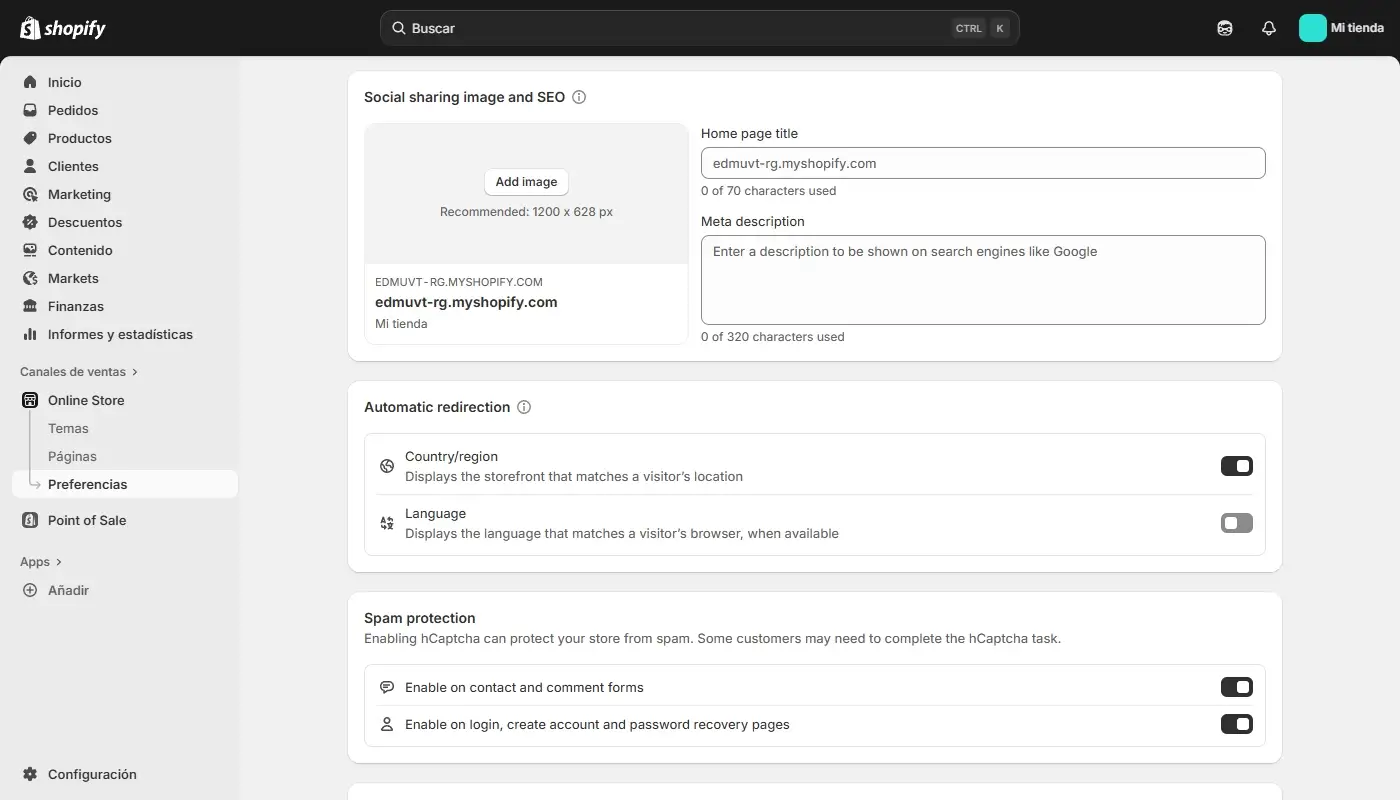
Shopify gives you a clean structure for product pages, collections, and category-style content. You can adjust SEO metadata for products, collections, pages, and posts, manage redirects, and work within a URL scheme that search engines understand for commerce sites. For product-led SEO-optimizing category pages, product detail pages, and “best X for Y” type commerce content-Shopify can be very effective, especially when you combine it with a thoughtful content strategy and internal linking.
If your marketing plan is dominated by brand content, services, and editorial pieces with some selling layered on top, Wix is often more pleasant to work with. If your SEO focus is the catalog itself, Shopify matches that mindset more closely.
7. Pricing and Value Over Time
On a price sheet, Wix often appears cheaper at the entry levels, while Shopify can look more expensive once you include apps and payment processing fees. But raw price rarely tells the whole story.
For a design-driven business site with a modest store, Wix’s bundles can provide excellent value: you get strong design tools, a capable store, and a collection of apps that cover typical business needs. For a revenue-driven online store that expects to grow, Shopify’s higher subscription and app spend are often easy to justify, because the platform’s features are directly tied to improving conversion, retention, and operational efficiency.
The more your business depends on online sales, the less relevant “cheapest monthly plan” becomes. The better question is which platform will cost you more in missed opportunities if its limitations start blocking your growth.
8. Shopify vs Wix at a Glance
Here’s a side-by-side snapshot to crystallize the differences:
| Aspect | Shopify | Wix |
| Core focus | eCommerce platform first, website second | Website builder first, eCommerce as a strong add-on |
| Main strength | Running and scaling online stores | Visual design, branding, mixed content + business websites |
| Learning curve | Moderate; admin built around store operations | Low–moderate; editor built around page design |
| Themes & design | Store-optimized, conversion-oriented storefronts | Large template library, very flexible layouts and visuals |
| eCommerce depth | Advanced features, multi-channel, strong app ecosystem | Good for small–mid stores, simpler setups |
| Apps & integrations | Huge, commerce-focused app store | Broad but more generalist app market |
| SEO & content | Strong for product/collection SEO, basic blogging | Strong for pages and blog, good for brand/content SEO |
| Best fit for… | Store-centric businesses, DTC brands, growing retailers | Creatives, service brands, content-driven sites with a store |
9. How to Decide Which Suits You Best
Instead of asking “Which is better, Shopify or Wix?” it’s more useful to ask what you expect your website to be doing for your business in the next two to three years.
If you see your site primarily as a store, and you expect that store to grow in catalog size, order volume, and operational complexity, Shopify is usually the safer bet. Its admin, themes, apps, and analytics are all aligned around making that store sell more efficiently and be easier to manage.
If you see your site primarily as a brand and content hub-a place where you publish articles, showcase work, describe services, and also sell products-Wix often feels like the better match. It gives you more freedom in how you design and structure pages, while still offering a capable, integrated store for small to mid-sized eCommerce.
Once you know whether you’re store-first or site-first, the Shopify vs Wix decision tends to become much clearer.
Top Shopify Replacement Options: Best Platforms to Move Your Site To
Final Verdict: Shopify vs Wix in Real-World Terms
Both Shopify and Wix are powerful-but in different directions. Shopify gives you a serious, commerce-driven engine that’s built to sell, scale, and integrate with a rich ecosystem of retail tools. Wix gives you a visually rich, flexible website builder with solid eCommerce capabilities that shine when your store is part of a wider brand experience.
If your choice still feels cloudy, it usually means you haven’t fully decided what role your website should play in your business yet. Clarify that first, and then pick the platform that matches that role-not just the one that looks easiest today.
If you’d like a migration checklist or a visual feature comparison to help you kickstart your move, just let me know – happy to help you make a smart and smooth transition!